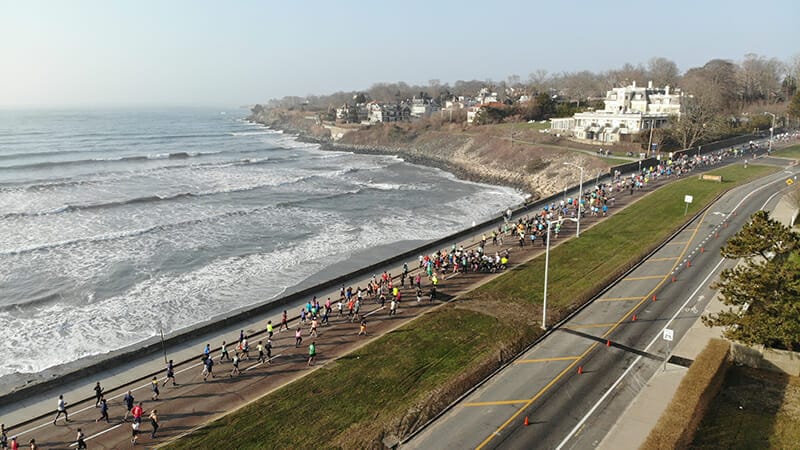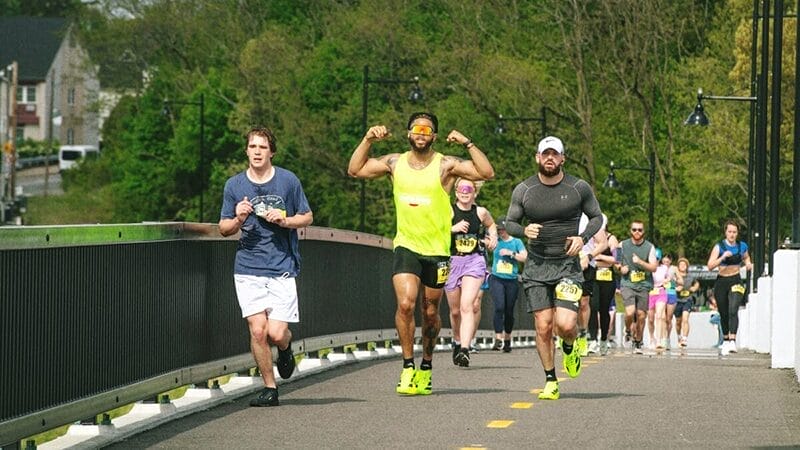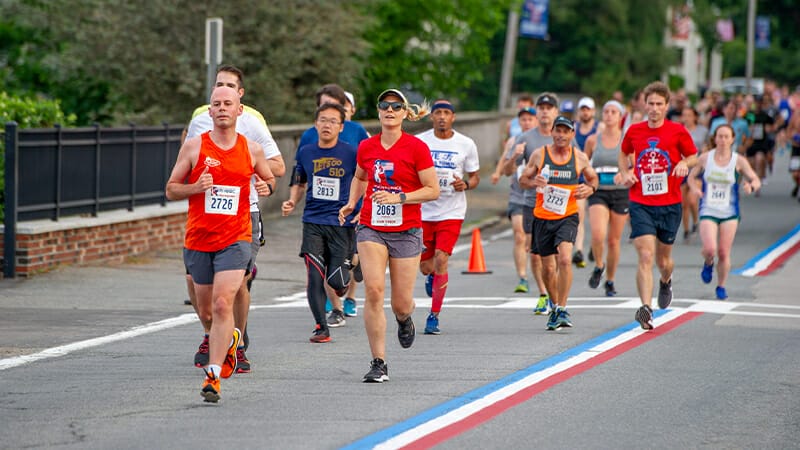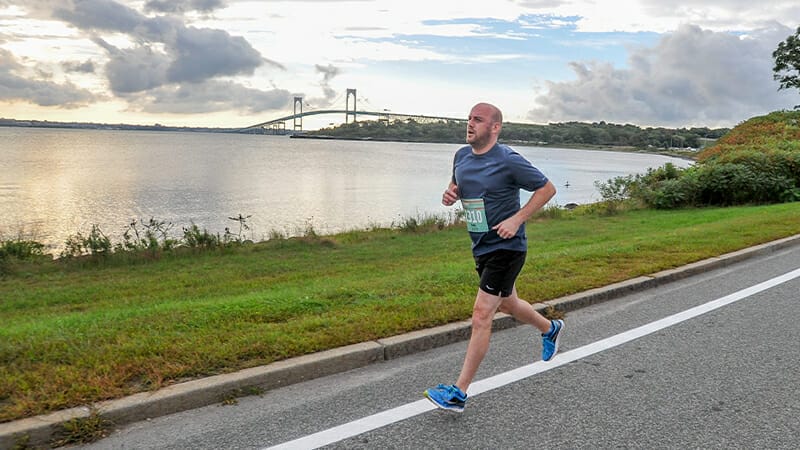


When most runners think about race day, they’re focused on their training, their race-day outfit, or maybe their fueling strategy. The last thing on their mind? Safety. And that’s exactly how it should be. At Rhode Races & Events, our top priority is making sure you feel secure and supported every step of the way.
But what does that look like behind the scenes? Here’s a closer look at the layers of planning and teamwork that go into keeping you safe during one of our races.
Months of Preparation with Local Officials
Safety starts long before the starting horn. Months in advance, our team is meeting with local police, fire departments, and emergency management officials across every town on the course. Together, we map out road closures, detours, and traffic management strategies to keep runners safe while minimizing disruption for the community.
These meetings are detailed. We discuss everything from which intersections need police details to how emergency vehicles can quickly access the course if needed. For races that cross multiple towns, like the Providence Marathon, that coordination can include half a dozen different police and fire departments. It’s truly a team effort.
Medical Coverage You Can Count On
No matter the distance, medical support is essential. On race day, you’ll find medical personnel stationed at key points along the course, often near aid stations, ready to assist if needed.
We also employ mobile medical units: bike medics who can quickly reach a runner in need, as well as ambulances on standby with direct access routes mapped out. For longer races, we work with local hospitals to make sure they’re aware of the event and prepared for possible patient transfers.
Even small details matter — like ensuring every volunteer knows how to radio in an emergency, or having hydration ready at the finish line.
Volunteers as the First Line of Support
Our volunteers aren’t just there to hand you a cup of water or cheer you on — they’re also trained to be alert for signs of distress. Whether it’s a runner who looks disoriented, overheated, or simply needs encouragement, volunteers are often the first to notice and act.
We provide instructions before the race to help volunteers recognize common signs of trouble, and they know exactly who to contact if something doesn’t look right. That network of eyes and ears is one of the most important parts of our safety plan.
Designing Safety Into the Course
When we design a course, runner safety and support are always at the forefront. Aid stations are strategically placed about every two miles so that athletes never feel unsupported, no matter their pace or distance. These stations not only provide hydration and fuel but also act as checkpoints where volunteers can keep an eye on the well-being of participants.
On top of this, every marathon course we produce goes through the extensive process of being USATF certified. This ensures that the distance is accurate and measured to the highest national standards, giving runners peace of mind whether they’re chasing a personal best or a Boston Marathon qualifier. It’s a lengthy and detailed process, but it’s one more step we take to ensure the integrity, safety, and quality of every race we put on.
The Race Morning Checklist
On race morning, one of the most important pieces of runner safety is making sure no one takes a wrong turn. At Rhode Races, we use a three-layered approach to course direction.
First, cones line the roads to guide runners into their lane and separate them from traffic. At every turn, we reinforce those boundaries with bright tape arrows placed directly on the pavement, making it clear which way the course continues. Finally, we back everything up with directional signs — small arrows posted at key intersections and decision points to provide one last confirmation.
By layering these three systems together, we remove the guesswork and give runners peace of mind, keeping them safe, confident, and focused on their race instead of worrying about the route.
Why It All Matters
At Rhode Races & Events, our mission goes far beyond simply putting on a race — it’s about creating an experience that athletes can feel confident and excited about from start to finish. Every detail, from the cones and arrows guiding you along the course to the aid stations strategically placed so you’re never without support, is designed with your safety and enjoyment in mind. We want you to focus on the joy of running — the rhythm of your stride, the views along the route, the energy of the crowd — without worrying about the logistics behind it all.
When race morning arrives, you can trust that countless hours of planning, coordination, and fine-tuning have gone into every turn, mile marker, and finish line detail. Our team, volunteers, and community partners all share one goal: to provide you with a safe, supportive, and memorable race day. Because at the end of the day, the happiest place on earth is the finish line.